
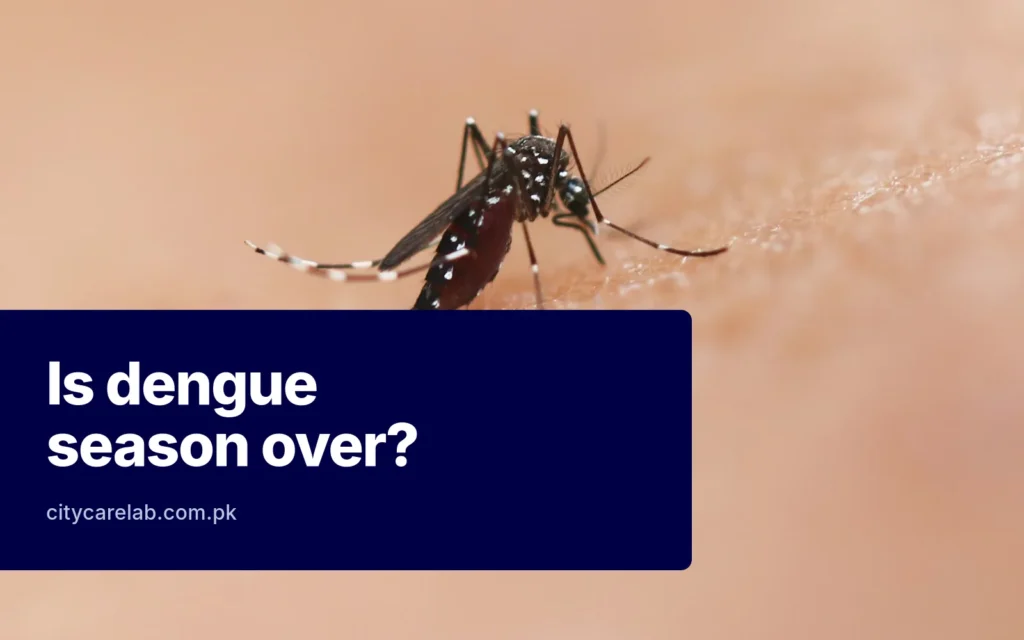
By late October, people in Gujranwala start saying it: “Thand aa gayi hai, ab dengue khatam.” The mornings feel cooler, so the mosquitoes must be gone.
Unfortunately, dengue does not follow the calendar that neatly. In Punjab, the highest numbers of cases are usually reported in October, and dengue in November is still common. Worldwide, reported cases have climbed from about 505,000 in 2000 to about 14.6 million in 2024, according to the World Health Organization. If someone at home gets a sudden high fever this month, dengue should still be on the list.
Quick Answers
- Dengue season in Punjab usually runs from August to November, often peaking in October.
- The mosquito that spreads dengue keeps biting as long as days stay warm, and it lives happily indoors.
- A sudden high fever with body and eye pain in November still deserves a CBC.
- Daily platelet counts during the critical days are just as important in November as in September.
- Cases usually fade in December once nights turn properly cold.
Why Dengue Continues Into November
The Aedes mosquito needs two things: clean standing water to breed in and warm temperatures to stay active. In Gujranwala, November afternoons are often still warm enough for it.
It also prefers to live indoors, behind curtains, under beds and in dark corners. Inside a home, it is protected from the cooler night air. Water in flower vases, room coolers that have not been emptied, fridge trays and plant pots keeps it breeding.
When Should You Think Dengue in November?
Most November fevers are flu, colds and other seasonal viruses. Still, a few signs should make you think of dengue and get a blood test:
- A sudden high fever, often 102°F or more
- Severe body, joint and eye pain
- A red, blotchy or pinpoint rash after a few days
- Someone nearby had dengue in the last few weeks
- A CBC showing low platelets or low white cells
- Warning signs like belly pain, vomiting, bleeding or drowsiness, which mean hospital today
Dengue can also look milder late in the season, especially in people who have had it before. Do not rule it out because the fever is not very high.
Which Tests Help?
CBC first
A Complete Blood Count (CBC) is usually the first test. In dengue, white cells and platelets often fall, and the hematocrit may rise. It also gives your doctor a baseline to compare against.
Platelet count to track the trend
If dengue is likely, your doctor may ask for a Platelets Count every 24 hours during the critical days, roughly day 3 to day 7. Our detailed guide to platelet count in dengue explains what the numbers mean.
Dengue NS1 and antibodies
NS1 works best in the first five days of fever, and IgM antibodies from about day 5. Our dengue NS1 and antibody panel is paused at the moment. If your doctor needs it, message us on WhatsApp and we will point you to the nearest option.
When the fever might be something else
Typhoid and malaria also continue into November. If the picture is unclear, our guide on telling dengue, typhoid and malaria apart explains which tests help on which day.
The Critical Phase Is the Same in Every Month
Whether it is September or November, the dangerous part of dengue usually comes as the fever breaks, around days 3 to 7. Families relax because the patient feels better, but that is when platelets often hit their lowest and fluid can leak from blood vessels.
Keep fluids going and keep testing as your doctor advises until the platelet count is clearly rising.
Go to hospital today if you notice
- Severe belly pain or vomiting that will not stop
- Bleeding from gums or nose, or black stools
- Drowsiness, confusion or restlessness
- Cold, clammy hands and feet
- Very little urine for 6 hours or more
How to Keep Your Home Dengue Free This November
- Empty and dry room coolers before packing them away for winter.
- Change water in vases and pet bowls every two or three days.
- Check rooftops and balconies for tyres, buckets and broken pots holding rainwater.
- Use mosquito repellent in the daytime, not only at night.
- Fix window screens and keep doors closed in the early morning and late afternoon.
Dengue Testing at Home in Gujranwala
A patient with high fever should rest at home, not wait in a queue. Book free home sampling and our phlebotomist will come to you. For daily platelet checks, many families book a fixed morning slot so results are comparable from day to day.
Prefer to walk in? No appointment is needed at any of our branches. You can find every branch address on our locations page.
Frequently Asked Questions
Can you get dengue in winter?
It becomes much less common once nights are consistently cold, usually from December. Indoor mosquitoes can still cause occasional cases.
I had dengue last year. Can I get it again?
Yes. There are four types of dengue virus. Having one type does not protect you from the others, and a second infection can sometimes be more severe.
How long after a mosquito bite does dengue start?
Usually 4 to 10 days. So a fever in mid November can come from a bite in early November.
Do I need to fast for a CBC or platelet count?
No. Eat and drink normally, and keep up fluids.
This guide is general health information from the City Care Lab team in Gujranwala. It does not replace advice from your own doctor.