
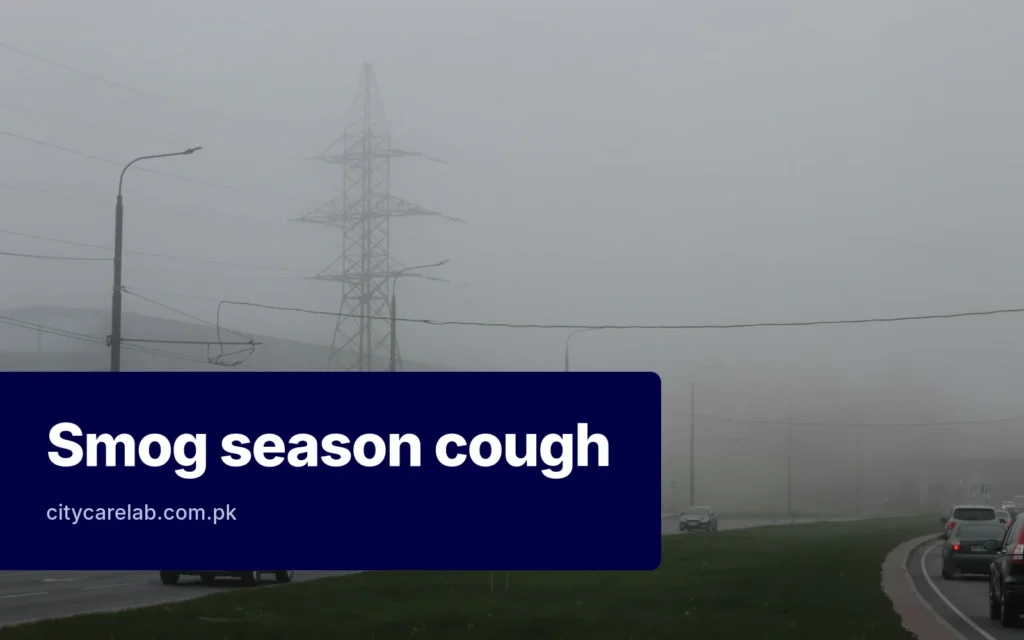
Every November, a grey haze settles over Gujranwala. Within days, clinics fill with people who cannot stop coughing. Some have burning eyes and a scratchy throat. Some have a wheeze they never had before. Others have a fever and a chest infection on top.
Gujranwala has repeatedly topped Pakistan’s air quality charts during smog season. If your family gets a smog cough every winter, this guide will help you understand what is going on, and when a blood test can help.
Quick Answers
- Smog irritation causes a dry cough, sore throat and burning eyes, usually without fever.
- Allergy or asthma often brings sneezing, wheezing and a night time cough. An IgE Level test can show an allergic tendency.
- A chest infection usually adds fever, thick phlegm and tiredness. A CBC and CRP help your doctor see if there is an infection.
- Many people have more than one at the same time.
- A cough lasting more than 2 weeks, coughing blood or breathlessness needs a doctor.
Why Smog Hits Gujranwala So Hard
Smog in central Punjab is a mix of vehicle exhaust, factory emissions, brick kiln smoke and crop burning, trapped close to the ground by cold, still air. Gujranwala’s industry and traffic add to it.
The smallest particles, called PM2.5, are thin enough to travel deep into the lungs. They irritate the airways, inflame the lining and lower the lungs’ defences against germs. That is why smog season brings both allergy flare ups and more chest infections.
Smog, Allergy or Infection: How to Tell
Smog irritation
A dry, tickly cough that gets worse outdoors and eases indoors is usually direct irritation. Eyes sting, the throat feels raw, and the nose may run. There is no fever. This usually settles as exposure drops.
Allergy and asthma
If the cough comes with sneezing, a blocked nose, itchy eyes or a whistling sound in the chest, smog may be triggering an allergy or asthma. Night time coughing and coughing after climbing stairs are classic clues. People with a family history of allergy, eczema or asthma are more likely to react.
Chest infection
When a cough brings fever, aches, thick yellow or green phlegm and real tiredness, an infection is more likely. Smog makes infections easier to catch, so they often arrive together.
Which Tests Can Help?
Not every cough needs a blood test. Your doctor may suggest one when the picture is unclear or the cough keeps coming back.
| Test | What it shows |
|---|---|
| IgE Level (Serum) | Raised IgE points to an allergic tendency |
| Complete Blood Count (CBC) | White cells suggest infection; raised eosinophils suggest allergy |
| CRP (C-Reactive Protein) | A high CRP points towards a bacterial infection |
| ESR | A general inflammation marker |
A normal IgE does not completely rule out allergy, and a high IgE does not say exactly what you are allergic to. Your doctor reads it with your symptoms.
Six Habits That Protect Your Lungs
- Check the AQI daily and plan errands and school runs for cleaner hours.
- Wear a well fitted N95 or KN95. Cloth and surgical masks block very little smog.
- Close windows on bad days and ventilate when the air is cleaner, usually in the afternoon.
- Move exercise indoors when the AQI is above 200.
- Stop burning at home. Coal, wood and rubbish fires add to indoor smoke, and so does smoking.
- Keep inhalers handy. Asthma and COPD patients should review their plan with their doctor before November.
Children, older adults, pregnant women and anyone with asthma, COPD or heart disease feel smog first. If someone in your home falls into these groups, make a plan with their doctor before the worst weeks arrive.
When to See a Doctor Straight Away
- Breathlessness at rest, or lips turning blue
- Coughing up blood
- High fever with chest pain
- A wheeze that does not ease with the usual inhaler
- A cough lasting more than 2 weeks (see our guide on TB tests for a long cough)
Getting Tested Without Going Out in the Smog
On high AQI days, the best place for a coughing patient is indoors. Book free home sampling and our phlebotomist will come to you anywhere in our Gujranwala service areas. Reports reach your WhatsApp the same day.
Or visit any of our branches, no appointment needed. You can find every branch address on our locations page.
Further reading: Ambient (outdoor) air pollution (WHO) and Asthma (WHO).
Frequently Asked Questions
Can smog cause a fever?
Smog itself does not usually cause a fever. A fever during smog season points towards an infection, which smog can make more likely.
Does an IgE test tell me what I am allergic to?
No. Total IgE shows whether your body has an allergic tendency. Finding the exact trigger needs specific allergy tests, which your doctor can advise on.
Do I need to fast for IgE or CBC?
No fasting is needed for IgE, CBC or CRP.
Is a smog cough contagious?
A cough from smog irritation or allergy is not contagious. A cough from a viral or bacterial infection can be.
Should my child get tested?
If your child coughs every winter, wheezes or wakes at night coughing, speak to your paediatrician. Our guide on allergy tests for children explains the options.
This guide is general health information from the City Care Lab team in Gujranwala. It does not replace advice from your own doctor.